Tendon-Driven Implantable Finger Prosthesis (Patent Pending)
For my undergraduate capstone at Vanderbilt University, I developed a tendon-driven finger prosthesis to better treat arthritis and severe joint injury.
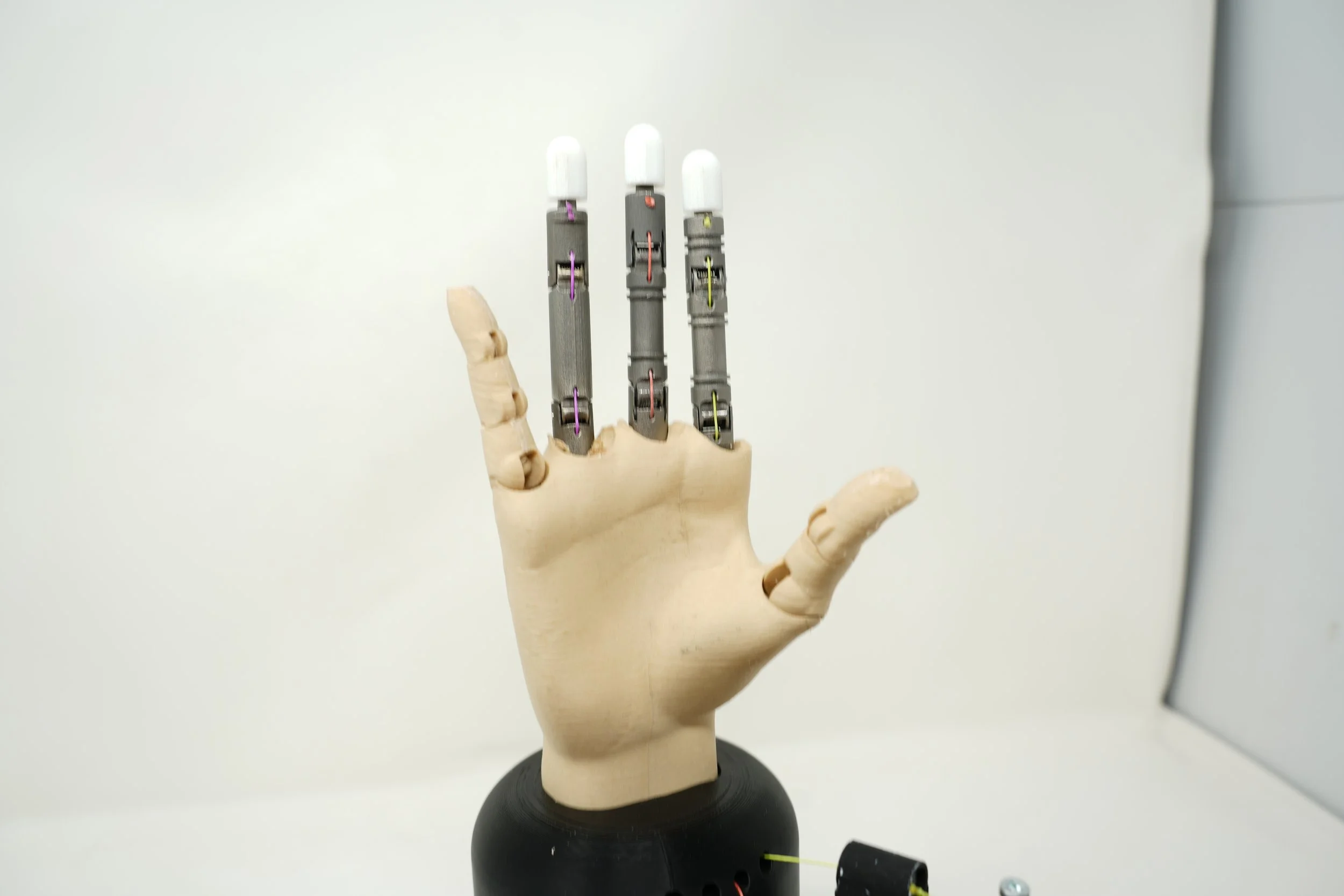
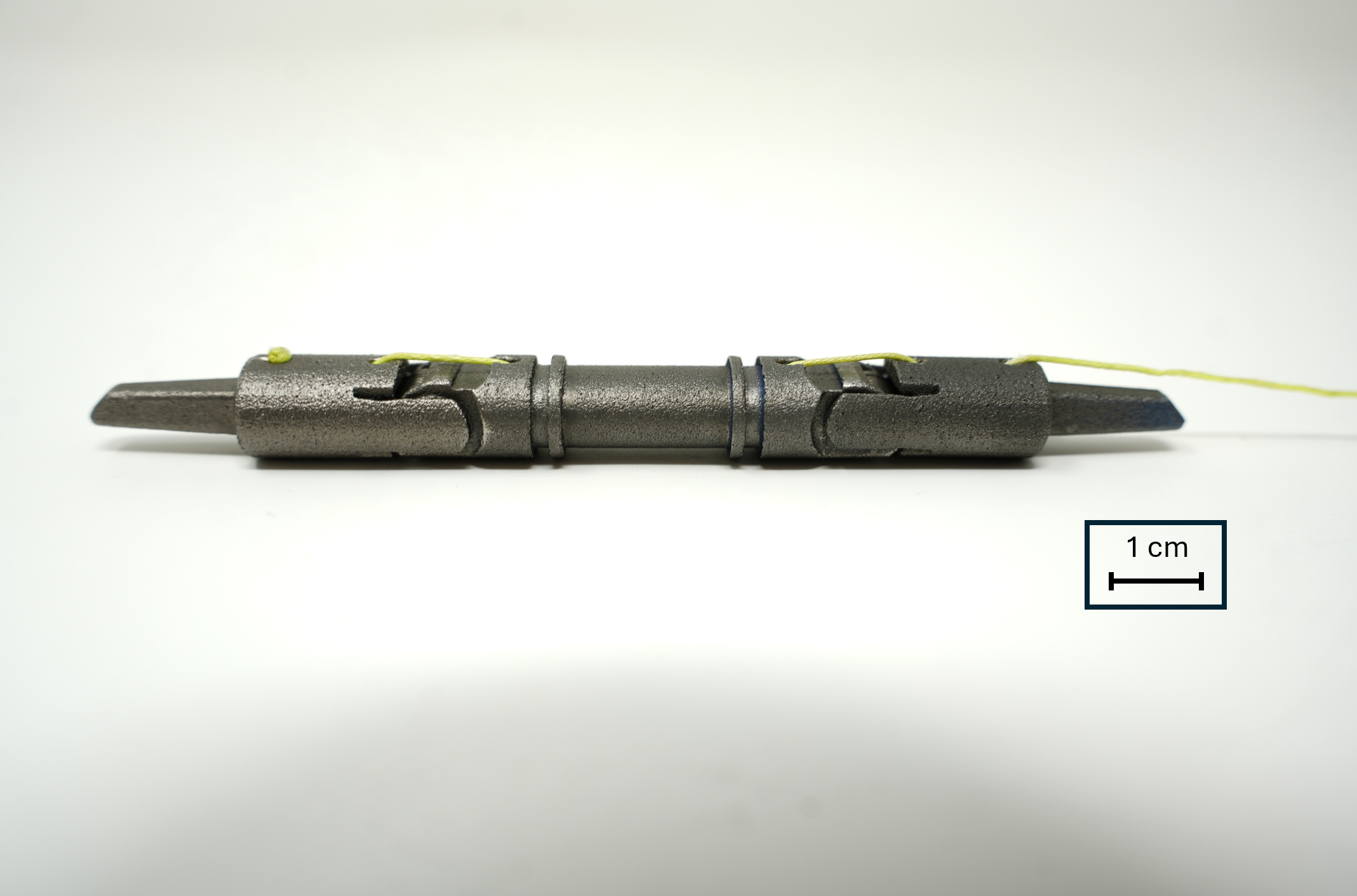
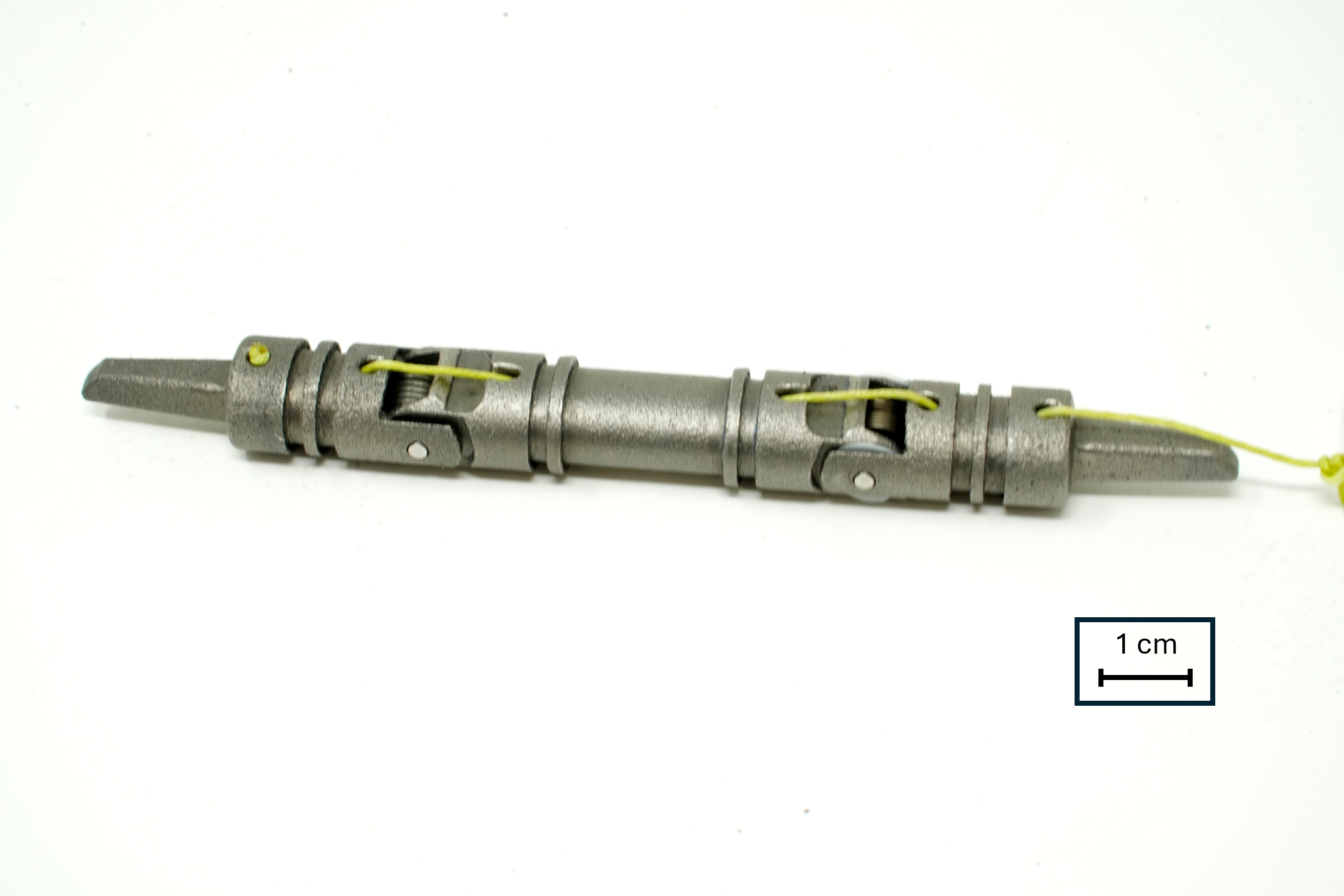
I supported my team’s efforts in CAD and 3D printing to iterate through five distinct concepts, ultimately developing an SLM 3D-printed titanium prototype that replaces three finger joints. Key features of the design include an internal hardstop, proximal and distal spikes for osseointegration. Ultimately, we produced 3 prototypes from biocompatible titanium, costing $55 in raw materials per device.
Eager to integrate my robotics background, I independently developed a MATLAB forward-kinematics model using transformations to predict joint positions under applied forces. Sweeping spring stiffness and rest angles, I identify components that enable our targeted 1 N actuation threshold and desired resting positions. Such data-backed design choices allowed us to decrease prototyping waste in the face of real time- and cost-constraints.
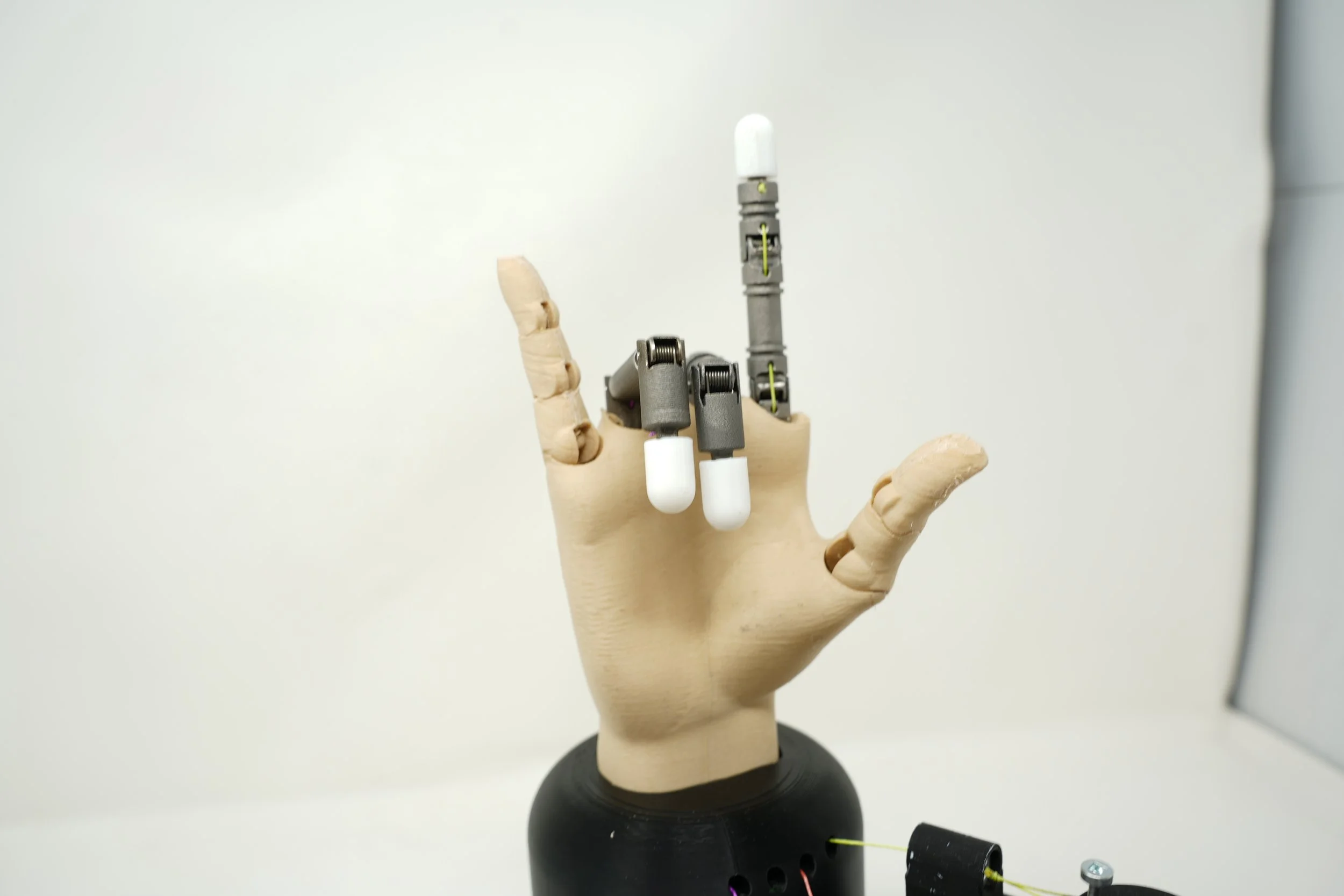
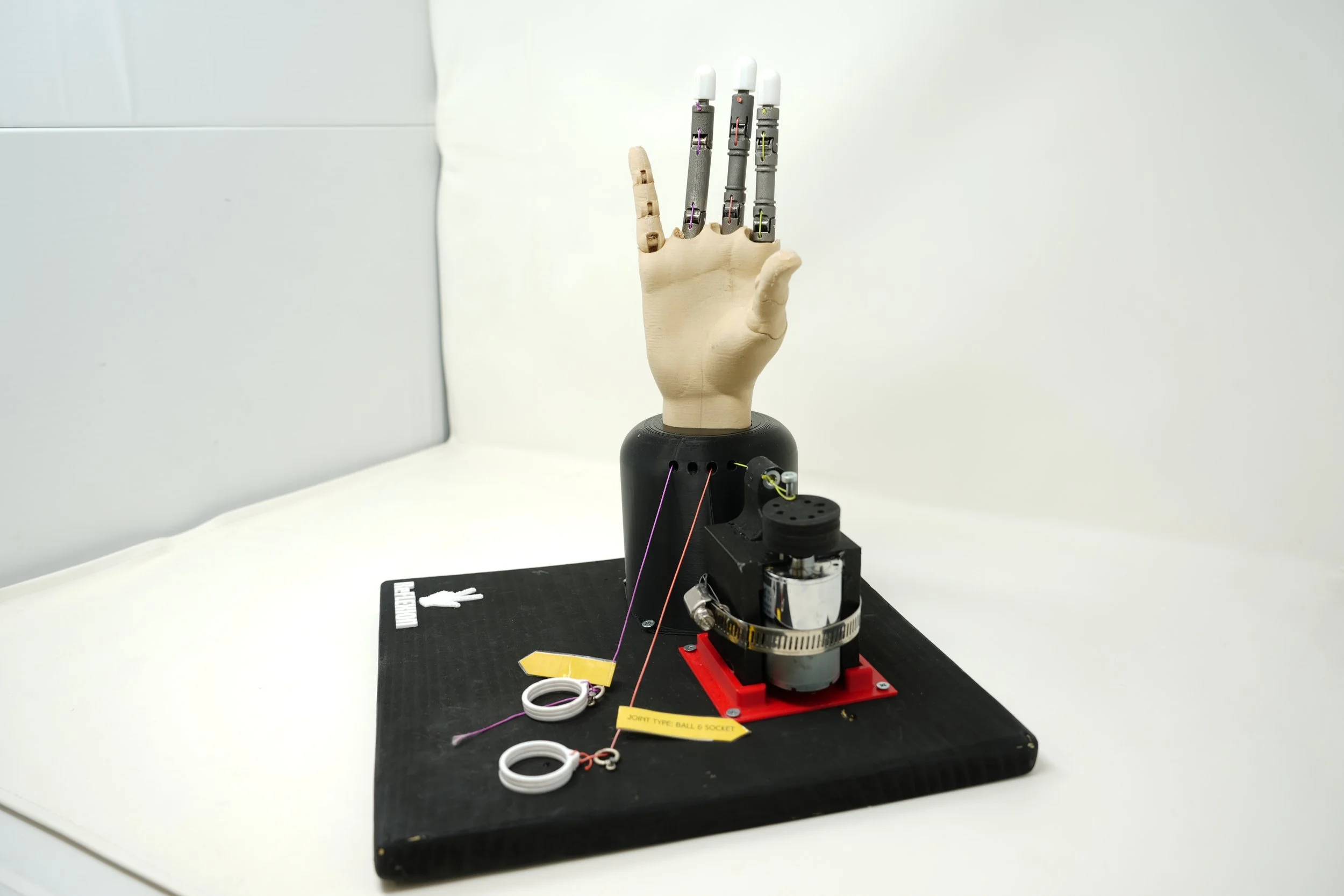
I also led the development of a mechatronic test fixture for cyclic actuation testing. We achieved the desired 90-degree range of motion and patient-driven actuation, further verifying the requirements in cadaver testing.
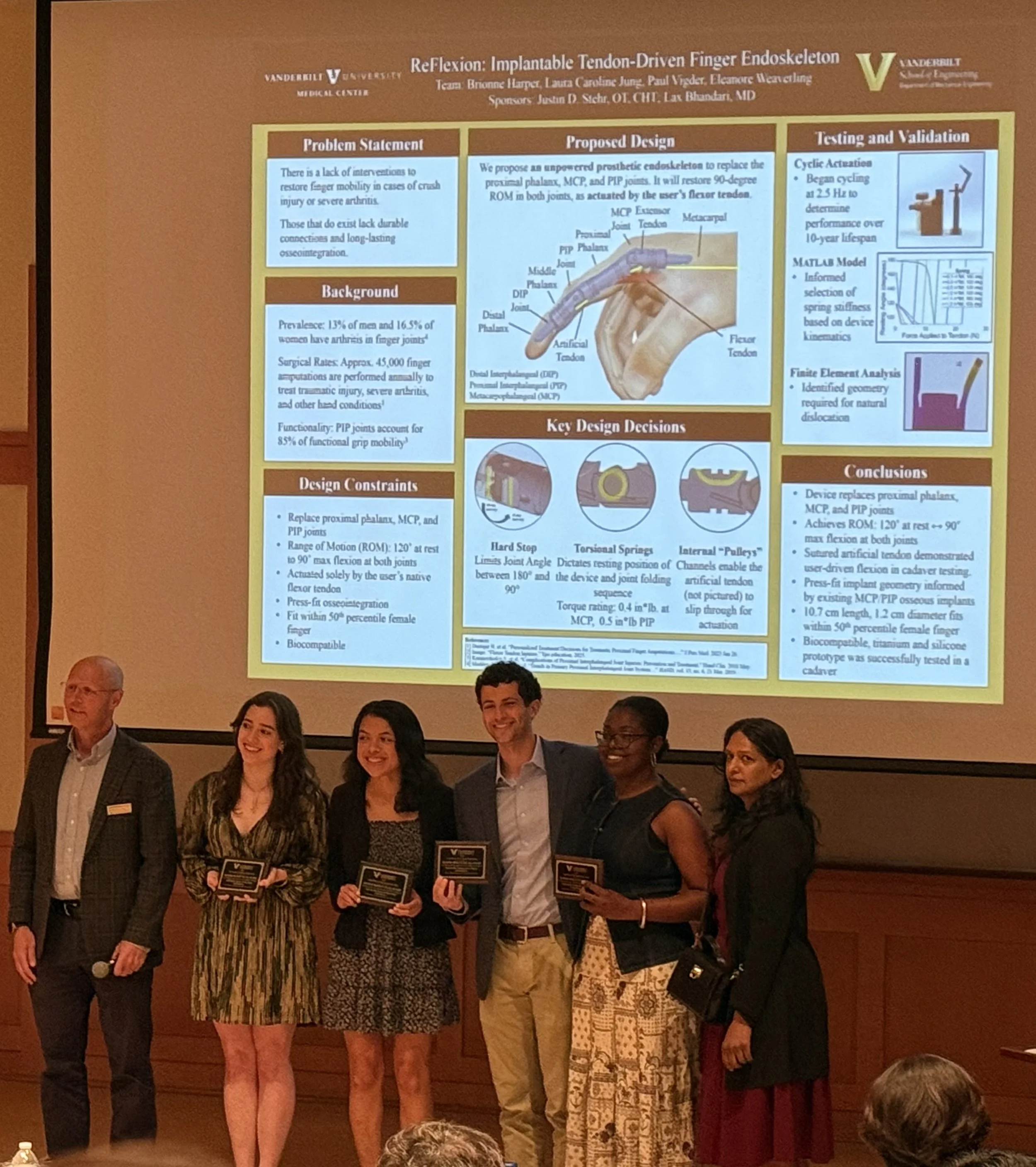
Our project was recognized as Top 3 Best Design Projects at Mechanical Engineering Commencement ceremony. The work is now patent pending, in collaboration with the Vanderbilt Tech Transfer office and our physician-advisors at Vanderbilt University Medical Center.
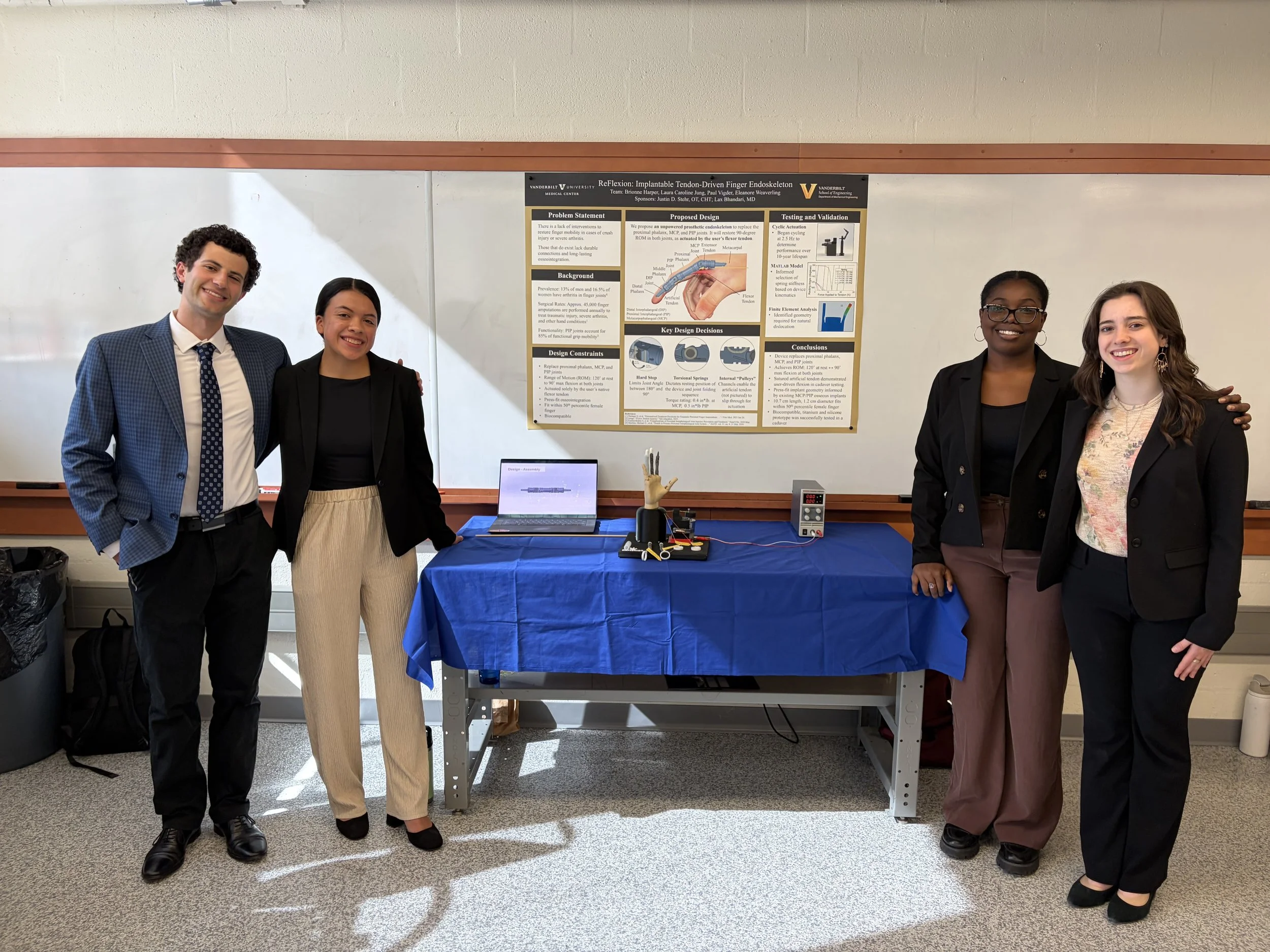
Our final presentation at Vanderbilt Design Day 2026 featured automated actuation of the device, plus manual control, embedded into a 1:1 scale model hand.